Scuba Diving & Salvage Recovery
Scuba Diving is a recreational activity that allows players to explore the ocean floor, discover wreck sites, recover valuable salvage, and uncover hidden treasures throughout San Andreas.
Whether you’re a casual explorer looking for adventure or a dedicated salvager searching for profit, diving offers a unique way to experience the waters surrounding the state.
Getting Started
Before entering the water, you’ll need the proper equipment. Diving specific equipment can be purchased at one of the various dive shops around San Andreas, aptly named “The Wet Spot”.
Wetsuit:
You’ll need to go to a clothing store and set up your wetsuit. Below are the outfit import numbers and clothing part numbers you can use for the basic suit. Then you can pick the color texture you prefer.
MALE:
Outfit Import Code: XXi2acoUh1
Jacket – 250
Legs – 94
Shoes – 67
Hands – 96
FEMALE:
Outfit Import Code: H3oq9u-yzi
Jacket – 261
Legs – 98
Shoes – 71
Hands – 111
Required Equipment:
- Diving Gear (once in inventory you can “use” it to toggle it on/off, or use the /scuba command)
- Oxygen Refill Tank
- Dive Flashlight (recommended) – press L to toggle the dive light in your inventory.
Advanced Equipment:
- Boat Sonar or Advanced Sonar (you only need 1 of these. The advanced sonar is a solid step up from regular sonar) – When in the driver seat of a boat, and with whichever sonar you own in your inventory, you can either double click it to toggle it, or enter the /sonar command in chat.
- Knife (must be equipped to use)
- Cutting Torch (for specific salvage, must be in inventory to be used)
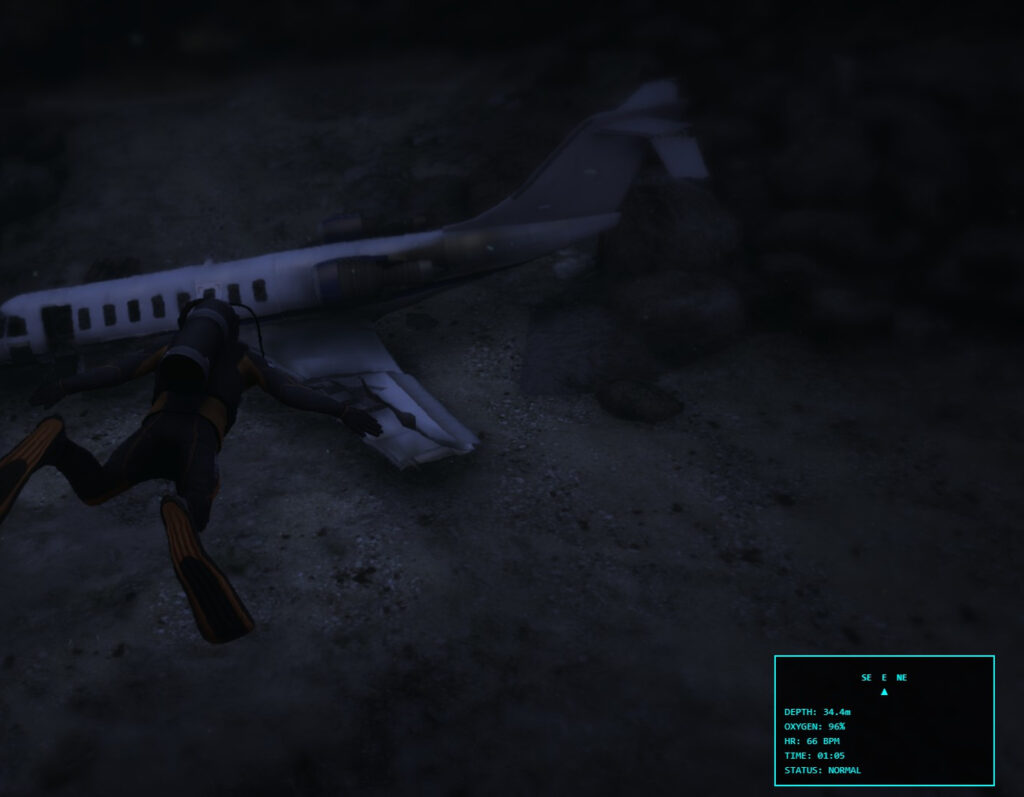
Once equipped with Diving Gear, you’ll be able to safely explore underwater locations while monitoring your oxygen supply through your on-board Dive Computer.
Oxygen Management
Your oxygen tank has a limited air supply.
While underwater:
- Oxygen slowly depletes over time.
- Deeper dives consume oxygen more quickly.
- Running low on oxygen can become dangerous.
- Running completely out of oxygen can result in injury or death.
Oxygen tanks can be refilled using Oxygen Refill Tanks purchased from approved retailers.
Emergency Services divers may also refill their tanks from designated dive support vehicles.
Always monitor your remaining oxygen before beginning a deep-water dive.
Sonar Systems
Boat Sonar and Advanced Sonar systems can be used to locate underwater points of interest.
Sonar can help locate:
- Cargo Fields
- Wreck Sites
- Salvage Locations
Standard sonar will help you locate possible dive sites within a 300 meter radius of your vessel. The Advanced Sonar provides improved detection capabilities up to 800 meters radius and can help divers locate valuable underwater targets more efficiently. With advanced sonar active, when you press J on the keyboard, it will actually put temporary markers on the map for any contacts within it’s current range.
Many experienced salvagers begin each expedition by scanning an area with sonar before deploying their dive gear.
Cargo Fields
Cargo Fields are underwater debris sites containing scattered cargo containers, crates, and other recoverable materials.
These locations regularly respawn over time, ensuring new salvage opportunities remain available.
Common finds include:
- Plastic
- Rubber
- Scrap Metal
- Steel
- Copper
- Aluminum
- Iron
- And increasing rarity and value loot.
Cargo Fields are ideal for newer divers looking to learn the salvage system while earning money.
Salvaging Containers
Different salvage containers require different tools.
Cargo Crates
Required Tool:
- Dive Knife
These crates typically contain common salvage materials.
Locked Crates
Required Tool:
- Dive Knife
Locked crates often contain higher-value materials and are worth seeking out.
Safes
Required Tool:
- Cutting Torch
Safes are uncommon finds that may contain valuable jewelry and precious items.
Sunken Wreck Exploration
Throughout the waters of San Andreas are various wreck sites, like sunken planes, ships, and more waiting to be explored.
Wreck sites are among the most rewarding diving locations in the state.
Within these wrecks, divers may discover:
- Rare valuables
- Jewelry
- Precious metals
- Historical artifacts
- Sealed compartments
Because of the increased rewards, wreck sites often require additional preparation and equipment.
Sealed Compartments
Some wreck sites contain sealed metal compartments.
Required Tool:
- Cutting Torch
These compartments require specialized equipment to access but often contain some of the most valuable underwater loot available.
Divers who invest in proper equipment and venture into deeper waters may discover rewards unavailable elsewhere.
Selling Salvage
Most recovered salvage has little use on its own and is intended to be sold for profit.
Different buyers may offer different prices depending on the item and market conditions.
Rare items recovered from shipwrecks often command significantly higher prices than common salvage materials.
Players are encouraged to explore, experiment, and discover the most profitable salvage routes. Word on the street is that if worse comes to worse, The Clark Brothers might buy what you find.
Tips for New Divers
- Always check your oxygen level before entering the water.
- Bring an Oxygen Refill Tank on longer expeditions.
- Use a Dive Flashlight for night dives and deep-water exploration.
- Sonar can dramatically reduce the time required to locate salvage sites.
- Cargo Fields are a good starting point for new divers.
- Wreck sites offer the highest potential rewards but require more preparation.
- Never begin a deep-water dive with a nearly empty oxygen tank.
Risk vs Reward
The deeper and more remote the dive site, the greater the potential rewards.
Successful salvagers carefully manage their oxygen, maintain proper equipment, and invest in better tools to access increasingly valuable underwater locations.
The ocean holds many secrets. Some are junk. Some are valuable. Some are dangerous.
Only one way to find out.